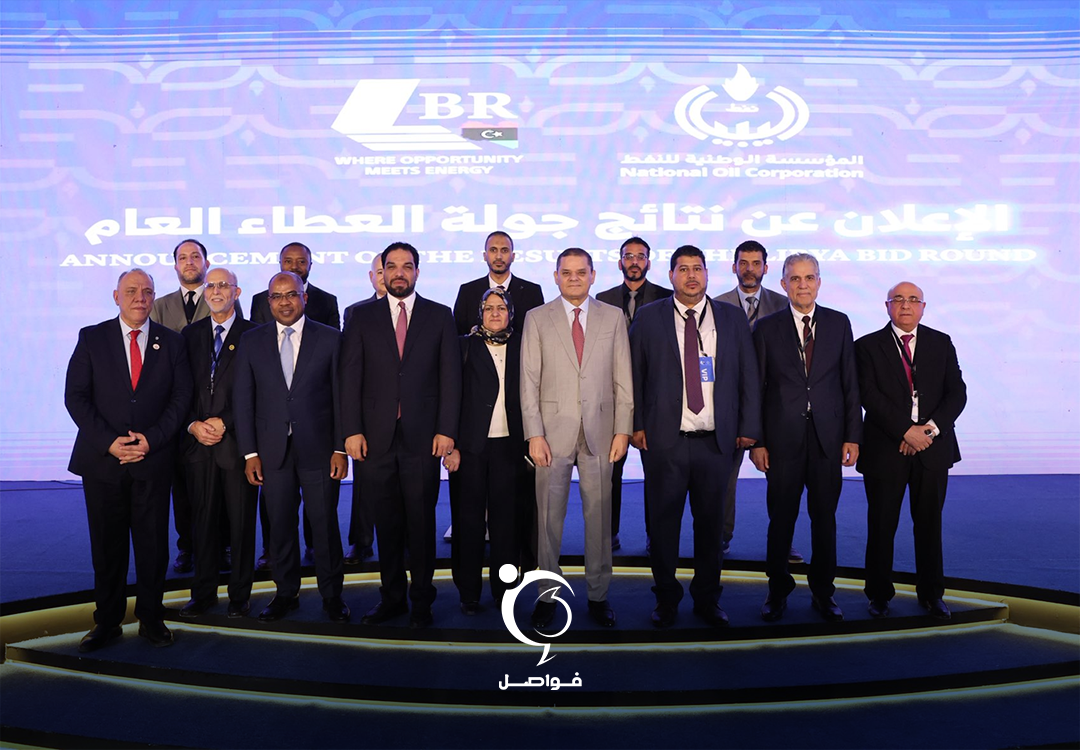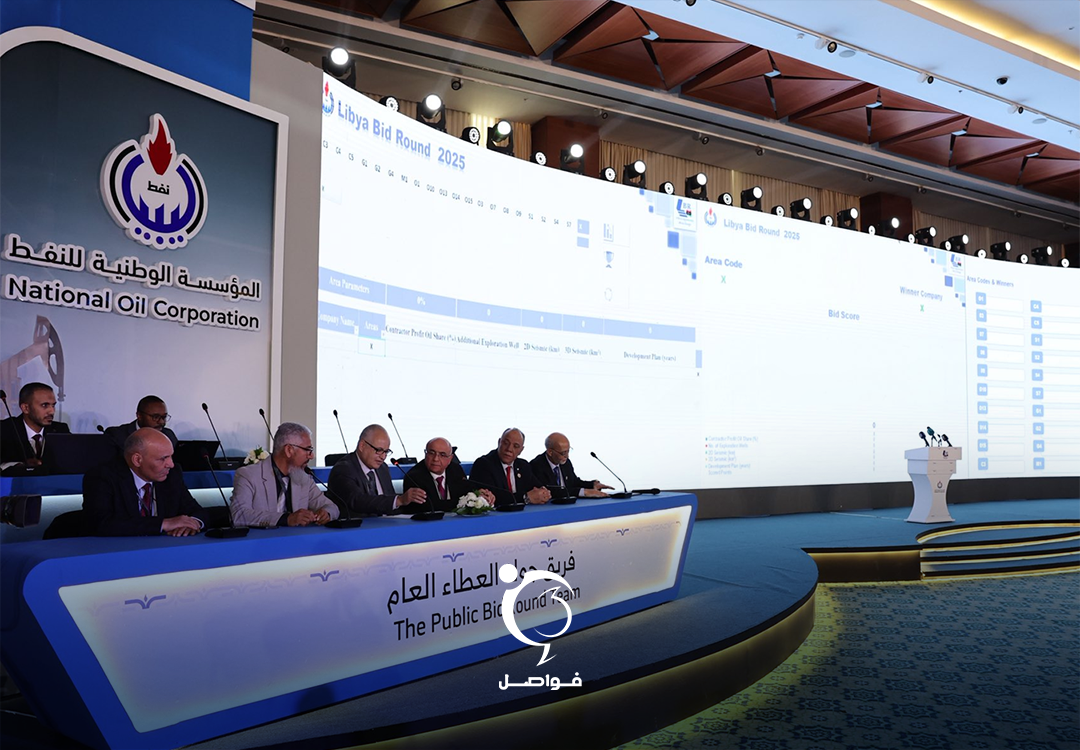

The National Oil Corporation concluded the final phase of the general exploration bid round, the first in nearly 17 years, with the participation of 37 major international and national companies competing for 20 exploration blocks, including 9 offshore and 11 onshore.
The round resulted in the awarding of 5 main companies and alliances, with the Repsol coalition together with a Turkish company and MOL winning Block 07, and the Eni and Qatar Energy coalition winning Block 01. In Block C3, the Repsol coalition with the Turkish company “TPOC” won, while Chevron won Block S4 in the Sirte Basin, and Aiteo won Block M1 in the Murzuq Basin.
Fifteen blocks remained without qualified bids, either due to the absence of partner submissions or because the submitted bids did not meet the technical and financial requirements, a result considered limited compared to the size of the media promotion for the round.
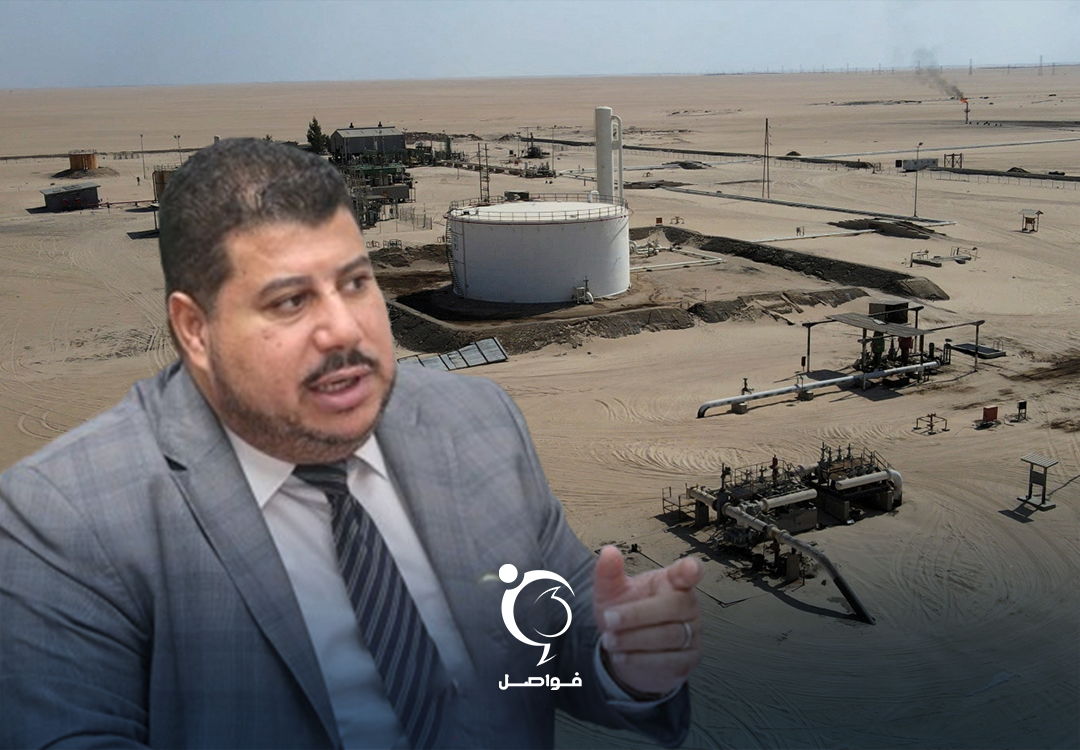
An oil exploration expert, who preferred to remain anonymous, said that the failure to award most blocks could leave a negative impression on investors regarding the exploration viability of some areas, necessitating a review of geological data assessments and technical promotion before offering them.
The expert explained that the alliances that won the bids primarily reflect a risk-sharing approach and the benefit of prior experience in Libya, rather than political considerations, noting that the entry of experienced companies like Chevron enhances confidence in certain basins, while the success of a Nigerian company is remarkable, as it was the only entity to submit a bid for the relevant block.
He pointed out that most of the awarded blocks are located in offshore areas, reflecting companies’ preference for environments less affected by security challenges compared to some onshore areas.
In a related context, the expert mentioned circulating information within the sector about the Corporation’s intention to award some blocks containing previous discoveries through direct negotiation, raising questions about transparency and equal opportunities, especially if open competitive mechanisms are bypassed.
Exploration bid rounds are considered one of the main tools to attract investments, increase production, and utilize undeveloped resources, making the results of this round closely monitored by regulatory and economic authorities amid Libya’s need to expand its exploration base in the coming years.